 12/02/2026 12:18
The Guardian
12/02/2026 12:18
The Guardian
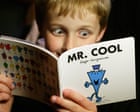
To help combat the impact of screen-time creep, the Countdown word supremo has a few suggestionsChildren’s vocabulary shrinking as reading loses out to screen time, says Susie DentChildren’s vocabulary is shrinking as reading loses out to screen time, the Countdown lexicographer Susie Dent has suggested, as she urged families to read, talk and play word games to boost language development.Dent, who also co-presents Channel 4’s Secret Genius with Alan Carr, is fronting a new campaign – working with an unexpected partner, Soreen malt loaf – aimed at boosting children’s vocabulary at snack time.Reading.Listening to audiobooks.Sharing word stories and routinely going to the dictionary to find out where words come from.Playing word games and puzzles, in print, online, with board games, or in the car.Having conversations while doing active tasks with your child such as cooking or walking.Asking your child to invent a new word, or to share the latest slang in their class.Learn another language.kerfuffle One of Soreen’s choices, kerfuffle is from Scots that describes a commotion or fuss. Children love it because of its sound, but it also adds a touch of humour to an otherwise tricky situation.mellifluous Not only does this word have a pleasing sound, fulfilling the very quality it describes, but its etymology is also gorgeous – mellifluous comes from the Latin for flowing like honey.thrill I chose this one because of its secret life. Something thrilling today is always positive, but in its earliest incarnation, to thrill meant to pierce someone with a sword rather than with excitement. The literal meaning of thrill was a hole, which is why our nostrils began as our nose-thrills, or nose holes.apricity This is one of the many words in the Oxford English Dictionary that were recorded only once before fading away like a linguistic mayfly. Apricity, from 1623, means the warmth of the sun on a winter’s day. The word is as beautiful as the sensation it describes.susurrus Say this word out loud and you will know its meaning instantly. Susurrus comes from the Latin for whispering and describes the rustling of leaves in a summer breeze.bags of mystery This Victorian nickname for sausages always makes me smile. It was inspired by the fact that you can never quite know what’s in them.snerdle English has a vast lexicon for snuggling, from nuddling, neezling and snoozling to snuggening, croodling and snerdling. Each of them expresses the act of lying quietly beneath the covers. Mind you, if you lie there a little bit too long, you could be accused of hurkle-durkling, old Scots for staying in bed long after it’s time to get up.splendiferous Another of Soreen’s picks, this word has a distinct touch of Mary Poppins about it. In the middle ages it meant simply resplendent, but since the 19th century it has been a humorous description of anything considered rather magnificent.ruthful The historical dictionary is full of lost positives – words whose negative siblings are alive and well while their parents have faded away. As well as being gormless, inept, unkempt, uncouth and disconsolate, you could in the past be full of gorm, ept, kempt, couth, and consolate. Best of all is surely ruthful, the counterpart to ruthless which means full of compassion.muscle Another word with a hidden backstory, and this one often makes children laugh. In ancient times, athletes would exercise in the buff in order to show off their rippling muscles (the words gym and gymnasium go back to the Greek for exercise naked). To the Roman imagination, when an athlete flexed their biceps, it looked as though a little mouse was scuttling beneath their skin. Our word muscle consequently comes from the Latin musculus, little mouse. Continue reading...
Continua a leggere su "The Guardian"