 01/12/2025 10:44
The Guardian
01/12/2025 10:44
The Guardian
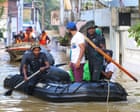
Hundreds remain missing in Indonesia and Sri Lanka as rescue efforts continue after Cyclone DitwahHow cyclones and monsoon rains combined to devastate parts of Asia – visual guideThis interactive shows how warm seas contribute to cyclone frequency and strength:The climate crisis has affected storm patterns, including the duration and intensity of the annual monsoon season, leading to heavier rainfall, flash flooding and stronger wind gusts. The Guardian’s Europe environment correspondent, Ajit Niranjan, has written this useful explainer on the impacts, causes and affects of flooding generally, and outlines what effective adaptation/management looks like. Here is an extract from the piece:The burning of fossil fuels has heated the planet, increasing the risk of extreme rains that lead to floods around the world, particularly in Europe, most of Asia, central and eastern North America, and parts of South America, Africa and Australia. A well-established rule of physics is that warm air can hold more moisture – about 7% for every 1C – though whether it does so or not depends on how much water is available. When heavy rain does fall, clouds can unleash far more water.Perhaps surprisingly, a lack of water can also worsen floods, by drying out the ground. Hard, caked soil does not absorb water so it runs off and pools in lower-lying regions, allowing water levels to rise much faster than otherwise. Continue reading...
Continua a leggere su "The Guardian"